Pet-Safe Household Cleaning: Disinfecting Floors & Counters Without Toxic Residue
Cats and dogs walk bare-pawed across freshly mopped floors and groom those paws minutes later. Learn which common cleaners to banish from pet homes.
Key Veterinary Takeaways
- Avoid phenol cleaners (pine-oil formulas), concentrated quaternary ammonium, and undiluted bleach.
- Tea tree, eucalyptus, pennyroyal, and wintergreen essential oils are especially hazardous to cats.
- Enzymatic cleaners break down pet urine uric acid crystals without harsh fumes.
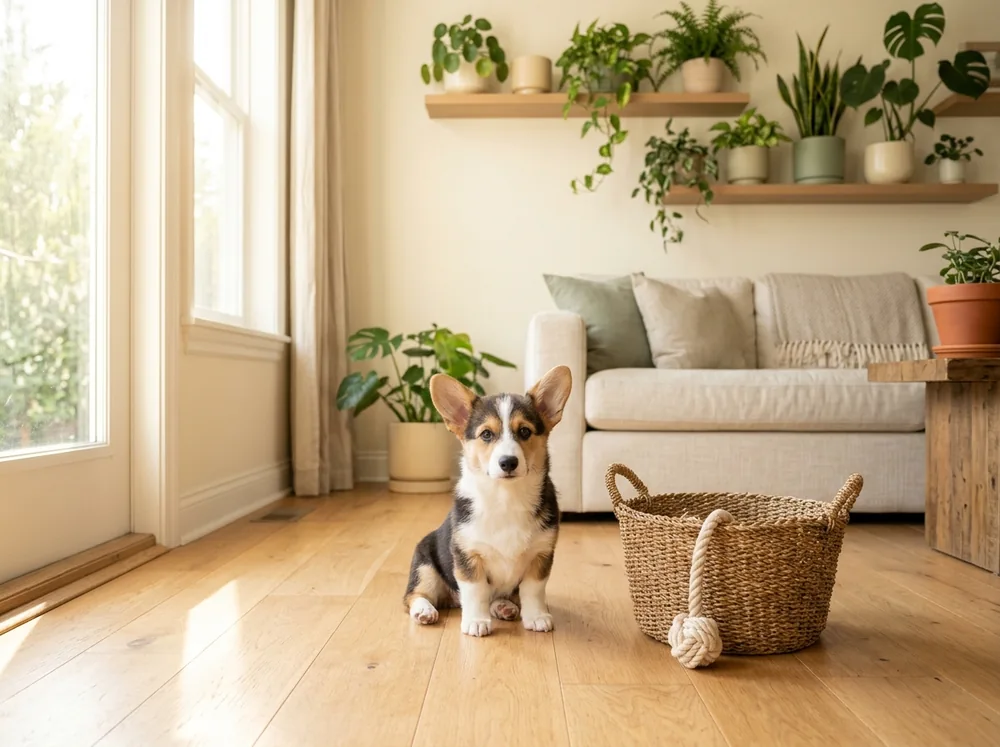
When humans mop kitchen tile or spray bathroom counters, we wear shoes and wash our hands afterward. Dogs and cats pad directly across damp surfaces, pick up trace chemical films on paw pads and belly fur, and ingest them directly during routine self-grooming.
Household Cleaners That Pose Real Risks to Pets
- Phenols (Common in Pine-Scented Cleaners): Cats lack specific hepatic glucuronidation enzymes needed to detoxify phenolic compounds, leading to liver damage and neurological weakness.
- Concentrated Quaternary Ammonium ("Quats"): Found in heavy-duty antibacterial sprays and disinfecting wipes; if licked while wet, quats cause painful oral ulcers on the tongue and esophagus, drooling, and fever.
- Concentrated Essential Oil Diffusers & Sprays: Tea tree (melaleuca), eucalyptus, clove, and peppermint oils can cause tremors and respiratory distress in cats and small dogs.
Safe, Effective Alternatives for Everyday Spills
For muddy paw prints and routine sealed-floor mopping, warm water diluted with a small splash of plain white vinegar or mild fragrance-free castile soap cleans safely—just let floors dry completely before letting pets back into the room. For house-training accidents, use a dedicated bio-enzymatic cleaner rather than ammonia sprays (since urine itself contains ammonia, ammonia cleaners actually encourage repeat marking).